Sign In
Upcoming Event
 Free Newsletter

PA organizations urge Gov. Shapiro, lawmakers to improve economic outlook

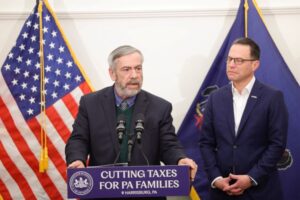
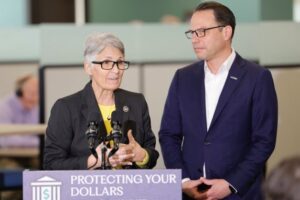
Governor Josh Shapiro is suing the Trump administration over control of Pennsylvania’s elections. PHOTO/PACAST
PA organizations urge Gov. Shapiro, lawmakers to improve economic outlook


Pennsylvania organizations are urging Gov. Josh Shapiro ahead of the Fiscal Year 2026-27 budget address to improve the economic outlook.
Led by the Pennsylvania Chamber of Business and Industry and representing leading business and industry associations across the commonwealth, The Stop New Energy Taxes Coalition sent a letter to Shapiro and the General Assembly urging policymakers to avoid new or increased energy taxes and continue supporting Pennsylvania’s energy sector.
Pointing to Pennsylvania’s improving economic outlook, the letter cited reports from Moody’s Analytics, Site Selection Magazine, and the U.S. Bureau of Labor Statistics showing the commonwealth leading the Northeast in economic growth and gaining recognition for its competitive business climate. Affordable, reliable energy is a key driver of that progress, the coalition notes.
The letter stated that targeting Pennsylvania’s energy sector with new taxes would raise costs for families and employers and weaken the commonwealth’s economic competitiveness
“Pennsylvania’s energy industries provide hundreds of thousands of family-sustaining jobs, attract private investment, and support economic growth across every region of the commonwealth,” the letter said. “With abundant natural resources and a skilled workforce, Pennsylvania is well-positioned to build on this momentum, so long as public policy supports – rather than penalizes – this critical sector.”
In addition, The Stop New Energy Taxes Coalition highlighted the success of Pennsylvania’s existing impact fee, which the Independent Fiscal Office estimates generated nearly $240 million in 2025, a 46% increase from the previous year. Since 2012, the impact fee has delivered more than $2.88 billion to local governments, infrastructure projects, and environmental programs across Pennsylvania.
The letter by The Stop New Energy Taxes Coalition cautioned policymakers against proposals to layer a severance tax on top of the impact fee, noting that comparisons to other states ignore Pennsylvania’s broader tax and regulatory environment. Lawmakers are urged by the coalition to preserve the structure and focus on policies that support growth, job creation, and long-term revenue stability.
“Affordable energy remains a cornerstone of Pennsylvania’s economic strength,” the letter said. “We urge you to avoid proposing new or increased energy taxes and instead commit to preserving the existing impact fee structure. Doing so will support economic growth, protect consumers and employers, and help stabilize state revenues without harming one of Pennsylvania’s strongest economic assets.”
In related news, Pennsylvanians for Accountability from Yass, Billionaires and Corporations (PAYBAC) is urging Gov. Shapiro and the General Assembly to tackle the revenue crisis created by the “Big Beautiful Bill” that they say will create a multi-billion dollar shortfall in this year’s budget, putting critical programs at risk.
PAYBAC is urging the raising of revenue from the wealthiest Pennsylvanians and preventing cuts to essential programs that working families rely on, like healthcare, food assistance, public transit, and schools.
“Governor Shapiro and the General Assembly can avoid disaster by enacting commonsense solutions that already have momentum and broad support in the legislature,” Raquel Jackson-Stone, of One Pennsylvania, a member of Pennsylvanians for Accountability from PAYBAC, said in a statement. “The fact is Pennsylvania needs more money, period, and if it’s not generated in this budget, life-saving programs like Medicaid and SNAP will be gutted.
“Every community in Pennsylvania will feeI the impacts if the legislature and governor don’t come together around a solution to raise billions of dollars in revenue this year. The working people of PA deserve better, and we’ll be watching next week, and all budget season, to see who is prioritized in this budget: hardworking Pennsylvania families, or wealthy billionaires and corporations who profit off a broken and rigged tax system.”
PAYBAC said that to backfill federal cuts and meet new unfunded mandates, at least $2 billion more is required in this budget year FY 26-27. In FY 27-28, at least an additional $2.8 billion driven by federal cuts is required, meaning legislators will need to begin spending nearly $5 billion more per year, every year starting in FY 27-28. This required funding is in addition to longstanding needs to increase the state share of public education funding and consistent public transit funding, said PAYBAC.