Sign In
Upcoming Event
 Free Newsletter

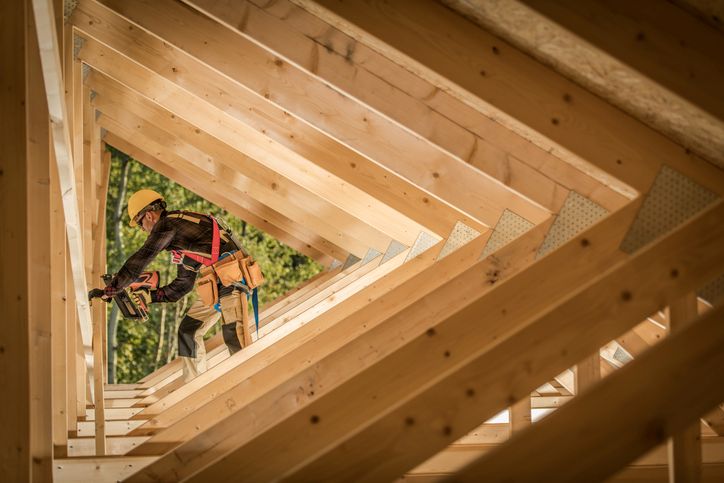
The long-awaited bipartisan 21st Century ROAD to Housing Act is scheduled to become law. WELCOMIA/GETTY IMAGES
Long-awaited bipartisan Housing Act to become law


The bipartisan 21st Century ROAD to Housing Act will become law and is expected to impact housing affordability and supporting lumber dealers in Pennsylvania and beyond.
Marking a major victory for lumber and building material dealers and the U.S. housing supply, the long-awaited housing legislation is supported by Democrats and Republicans. According to the American Building Materials Alliance (ABMA), the 21st Century ROAD to Housing Act is one of the most significant federal housing packages in years and delivers a major legislative victory for the lumber and building materials industry.
The legislation builds on months of leadership by the ABMA to advance policies that increase housing affordability and expand the nation’s housing supply. ABMA is a coalition advocating on behalf of the lumber and building materials industry at the federal level, representing LBM dealers and associated businesses across Washington, D.C. and 17 states, including Pennsylvania.
The ABMA, its member associations, and industry advocates worked throughout the legislative process to ensure lawmakers understood how excessive regulation, permitting delays, and rising construction costs affect both housing affordability and the businesses that supply America’s builders. During this year’s ABMA Advocacy Day, members from across the country traveled to Washington, D.C., to meet directly with members of Congress and their staff, sharing firsthand how federal housing policy impacts independent lumber and building material businesses.
“Today’s enactment is a testament to what our industry can accomplish when it speaks with one voice,” Rita Ferris, president of the Northeastern Retail Lumber Association, said in a statement. “ABMA members worked tirelessly—from providing recommendations to the White House to advocating on Capitol Hill—to advance practical housing reforms. We’re proud to have helped move this legislation across the finish line.”
The bill will become law without the signature of the president, Trump announcing Friday that he will not sign the legislation after it was presented to the White House. Trump said he was declining to sign the housing legislation in protest over the Senate’s failure to pass separate election-related legislation. Because Trump did not state that he would veto the legislation, the bill is expected to proceed through the constitutional process by which it becomes law without his signature.
The legislation marks the culmination of years of advocacy by the lumber and building materials industry and an important step toward expanding the nation’s housing supply, improving housing affordability, and supporting independent businesses that serve communities across the U.S.
ABMA leadership and representatives of the Massachusetts Retail Lumber Dealers Association worked closely with the office of Sen. Elizabeth Warren (D-Mass.) through a series of meetings to address issues and help build bipartisan support.
Implementation of the new law will begin following the expiration of the constitutional review period, with multiple federal agencies—including the U.S. Department of Housing and Urban Development, the U.S. Environmental Protection Agency, the Department of Commerce, the Department of Transportation, the U.S. Army Corps of Engineers, and the Federal Housing Finance Agency, among others—responsible for carrying out the law’s provisions.
ABMA and its member associations will work with policymakers and federal agencies throughout the implementation process to help ensure the legislation delivers improvements for builders, suppliers, homebuyers, and the independent lumber and building material businesses that serve communities across America, per the release.
“Passing this legislation is an important milestone, but successful implementation will determine its lasting impact,” said Kristina Berano, executive director of the Florida Building Material Association. “We look forward to working with our federal partners to ensure these reforms remove unnecessary barriers, expand housing opportunities, and strengthen the businesses that supply America’s growing communities.”