Sign In
Upcoming Event
 Free Newsletter

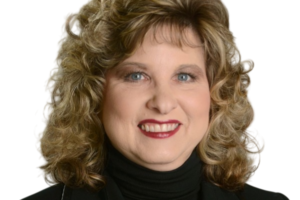
President and CEO of Hamilton Health Center, Terese DeLaPlaine, talks about new satellite location

President and CEO of Hamilton Health Center, Terese DeLaPlaine, talks about new satellite location


You have recently stepped into the role of president and CEO, following Jeannine Peterson, who served for 22 years. What do you bring to the position and what do you hope to accomplish?
I think I bring a bridging of, if you would call it, the old guard with the new guard. I worked under Jeannine for approximately seven years before I became CEO, and so I have a lot of historical knowledge about the organization, the community, where things we’ve tried have been successful or weren’t so much. But then I also bring my own new ideas to the table that I’m looking forward to implementing, along with some old partners of Hamilton and hopefully some new partners along the way.
Hamilton also recently broke ground on a new satellite location, which will be part of the Steel Works Revitalization in Steelton. Why is it important to locate there?
As an FQHC, we are required — as one of the federal requirements for the grant — that we be in an area of demonstrated need. Steelton happened to be one such place, and a few years ago, the Department of Human Services did a statewide study looking at areas where there were significant healthcare disparities, and in our capital region there were four of the zip codes identified as being high areas where there were such disparities. One of them was the Steelton 17113 and another big one was where we have our main campus, 17104. That was really the driving factor, along with the fact that there has been a grassroots effort to try to get more low income, high quality healthcare providers in that area for easy access.
Hamilton has grown in just over 50 years from a part-time clinic in the basement of a church; what do you think has been the key to this growth?
I don’t think it’s any one thing, but I think a lot of it is having the right people with the right momentum at the right time with the right goals. Certainly the community embraced Hamilton, and I think in its 50 years Hamilton has always been trying to monitor that they have responded in the way that the community wanted them and needed them to. But if it was one thing, it would have to be having strong, compassionate and committed leadership, not just in the CEO but also the board of directors. On our board of directors, 51 percent have to be users of the services, and I think that makes a difference too, especially when you have a volunteer group for a non-profit, who better to tell you how you’re doing then your own users that are governing?
What local summer event or activity are you most looking forward to?
You’re going to laugh when I say this, but all of them! I say all of them because I never know which ones I’m going to actually get to. Hamilton has some coming up more towards the September time frame, our baby buggy event is always very well attended and I’m looking forward to that as well as our annual golf tournament. I’m always interested and curious in seeing what other organizations and agencies are doing and being supportive, so if it’s something that’s coming up and I can fit it in then I do my best to be there and help out anyway I can.
Jennifer Botchie Deinlein
About Terese DeLaPlaine
Little did Terese DeLaPlaine know, when she started doing office work at an FQHC in her native Susquehanna County at the age of 15, that she would find a vocation that has lasted more than 20 years. She joined Hamilton Health Center as chief compliance officer in 2014 and was named president and chief executive officer in September 2022. She previously served as CEO of NEPA Community Health Care for five years.
DeLaPlaine, 53, earned a bachelor’s degree in criminal justice and corrections from the University of Scranton and her juris doctorate from the Syracuse University College of Law.
She and her husband of 30 years recently moved to Marysville. They have adult twin sons.