Sign In
Upcoming Event
 Free Newsletter


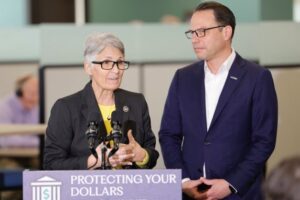
Governor Josh Shapiro signed into law the FY2025-26 bipartisan budget, which was approved Wednesday following months of negotiations between the governor and Pennsylvania’s legislative leaders. PHOTO/PACAST
Pennsylvania ends four-month budget impasse


Pennsylvania’s House and Senate approved a 2025-26 Fiscal Year Budget deal Wednesday, ending the state’s four-month budget impasse.
Governor Josh Shapiro signed into law the FY2025-26 bipartisan budget, which was approved Wednesday following months of negotiations between the governor and Pennsylvania’s legislative leaders.
“Pennsylvania is on the rise, and this budget continues our progress, solving problems that Harrisburg has ignored for years, creating more opportunity for our students, workers, and businesses, and putting the commonwealth on a path to sustained growth,” Shapiro said in a statement. “In a divided legislature, we proved once again that Democrats and Republicans can come together to get stuff done for the good people of Pennsylvania — cutting taxes, investing in education and workforce development, supporting law enforcement and reducing crime, and keeping our economy growing.
“Since my first day in office, I’ve been focused on solving the most pressing problems we face by bringing people together and getting stuff done — this budget continues that progress and will speed our rise.”
Senate Republican Leaders said the bipartisan state budget plan will help grow Pennsylvania’s economy and makes key improvements to the spending plan proposed earlier this year by Shapiro.
The approved budget includes state General Fund spending of $50.09 billion, a $2.27 billion increase over 2024/25. The projected 2025/26 General Fund ending balance is $200 million. In addition, the budget does not affect the Rainy Day Fund, which has a balance of $7.5 billion.
“The closing of the 2025-26 state budget process marks a new beginning for this commonwealth, filled with economic growth and opportunity,” Senate Majority Leader Joe Pittman said. “This budget moves, monumentally, to increase the promise of Pennsylvania. This is a pro-family and pro-job creator plan, and we have protected taxpayers by making sure the Rainy Day Fund stays intact.”
The budget includes the following:
- $565 million increase of adequacy and tax equity payments to meet constitutional obligation to public schools
- $100 million for school safety and mental health grants
- $9.5 million more for Pre-K Counts, which will be used to increase the per-student reimbursement rate for full-time students from $10,500 to $10,748, or 2.36%
- $747 million or 8% increase for the MA Managed Care program
- $154.4 million or 6.1% increase for Intellectual Disabilities – Community Waiver Program
- $13.2 million or 7.1% increase for Early Intervention programming
- $62.2 million in State funds for Violence Intervention and Prevention
Pennsylvania Chamber of Business and Industry President and CEO Luke Bernstein issued the following statement following passage of the 2025-2026 state budget and related policies and code bills:
“This budget agreement contains several major victories the business community has long fought to achieve that will enhance our state’s overall economic competitiveness. Meaningful permitting reform is a huge step in the right direction and builds upon last year’s success, while exiting the Regional Greenhouse Gas Initiative (RGGI) will provide much-needed clarity and encourage energy development and investment. This represents important progress for Pennsylvania.
“We also applaud the continuation of additional pro-growth tax provisions, including maintaining the phasedown of Pennsylvania’s corporate net income tax and the gradual increase of net operating loss deduction limits, as well as key investments to support workforce development.
“However, the agreement contains a tax provision that will make Pennsylvania less competitive by discouraging research and development investment into the commonwealth, though we are encouraged that language was included that requires the Department of Revenue to review the provision’s impact, which should inform policymaking going forward.”