Sign In
Upcoming Event
 Free Newsletter

Penn State College of Medicine announces $3M for pediatric cancer research

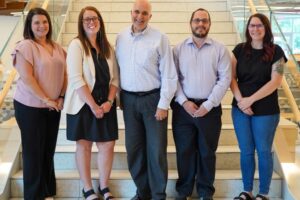
Members of the Beat Childhood Cancer Research Consortium accept a philanthropic donation in the amount of $3 million from the Beat Childhood Cancer Foundation. The funding will help to advance new and ongoing clinical trials and enhance critical collaborations. PHOTO/PROVIDED BY PENN STATE COLLEGE OF MEDICINE
Penn State College of Medicine announces $3M for pediatric cancer research


The Beat Childhood Cancer Foundation is committing $3 million to the Beat Childhood Cancer Research Consortium to advance pediatric cancer research.
Penn State College of Medicine in Hershey announced the philanthropic commitment to support the Beat Childhood Cancer Research Consortium at the College and partnering c, onsortium hospitals around the world.
“This commitment reflects the voices of parents and advocates who know firsthand how urgently children need better options,” Sarah Bartosz, executive director of the Beat Childhood Cancer Foundation, said in a statement. “By supporting the Beat Childhood Cancer Research Consortium, we are helping ensure innovative clinical trials reach every child, everywhere. For us, hope is not just a word, it is an action.”
According to a release, the funding will support Research Consortium infrastructure to advance new and ongoing clinical trials and enhance critical collaborations, advancing safer, more effective, and more personalized treatments for children diagnosed with cancer.
The Beat Childhood Cancer Foundation and the Beat Childhood Cancer Research Consortium are separate organizations sharing a commitment to improve outcomes and quality of life for children with cancer. The Beat Childhood Cancer Foundation is a 501(c)(3) nonprofit organization founded by parents seeking better options for children facing cancer. The foundation works with the Research Consortium and partnering foundations to guide investments in medicine and research.
The Beat Childhood Cancer Research Consortium is headquartered at Penn State College of Medicine in Hershey and is an international clinical trials network of more than 55 children’s hospitals and research institutions around the world. The consortium manages multi-site pediatric cancer clinical trials from concept through completion, providing children with access to therapies not otherwise available. This model allows children to access promising therapies closer to home.
“Investing in pediatric oncology requires real courage,” said Giselle Saulnier Sholler, chair and founder of the BCC Research Consortium at Penn State College of Medicine. “Pediatric populations are small and regulatory pathways are complex. We are deeply grateful for partners like the Beat Childhood Cancer Foundation who choose to stand with children and families and champion the therapies these patients urgently need.”
The consortium has opened more than 28 clinical trials, including new molecular-guided therapies for children with high-risk, relapsed or refractory solid tumors. In neuroblastoma, preclinical data became a clinical trial that led to an FDA‑approved therapy, IWILFIN, now changing outcomes for children, per the release. This is a model the consortium looks to bring to pediatric brain tumors, sarcomas, and other rare pediatric cancers.
“This commitment underscores the power of strategic partnership in advancing pediatric cancer research,” said Karen Kim, dean of Penn State College of Medicine. “At the College of Medicine, we are committed to translating scientific discovery into clinical impact; by aligning philanthropic leadership with a proven clinical trials infrastructure, we are accelerating discoveries that can change the standard of care for children worldwide.”