Sign In
Upcoming Event
 Free Newsletter

York: Building on business momentum focus of candidates


There’s the planned York County History Center, at North Pershing Avenue and West Philadelphia Street; plans for a high school for York Academy Regional Charter School near the Codorus Creek, and a “Keystone Kidspace” educational facility at the historic National Guard Armory on North George Street.
Over the next four years, the two-term Democrat said, “we want, and we expect, to continue to build off of the momentum that we have had.”
But she faces a challenge in the May 16 primary from fellow Democrat, and York City Council president, Michael Helfrich. No Republicans are on the mayoral ballot, York County elections officials said.
Helfrich said more needs to be done to improve the neighborhoods outside of York’s main business district, which “not only have been left to wither, they’ve had things taken away from them.”
A councilman since 2012, Helfrich wants the city to work more closely with churches to provide social programs for at-risk youth, and he calls taxes “the No. 1 issue holding everything back in the city.”
Both candidates talked with the Business Journal about their goals for York over the next four years.
Mayor: Wants to build on successes

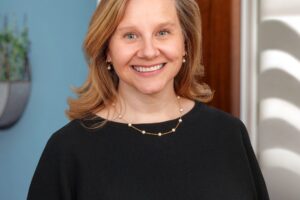
Bracey, 53, a York native, was the city’s director of community development before running for the top post. She became the city’s first African-American mayor when she was elected in late 2009.
“It’s been a good feeling to have been mayor over the last seven years, and I’m honored to put my hat back in the ring, because I hope to keep the momentum going in my hometown,” Bracey said. “We know people are returning back to our city, in particularly our downtown. I’m honored that we’re enjoying what we have right now.”
Bracey sees a city, not quite a half-century after late-1960s race riots, flooding from Hurricane Agnes and the loss of the White Roses baseball team, on the rebound, with an influx of new restaurants, apartments and other developments.
She’s confident that more good things are ahead.
She wants to see York’s long-vacant Northwest Triangle redeveloped, wants to continue downtown revitalization and extend it out into city neighborhoods.
“A lot is happening in downtown York, but government really is not the reason for it,” she said, saying it’s the role of government to create the right conditions for development.
“We don’t have the funds as a city to create what we’re seeing in downtown York right now. That’s purely independent, private America, developers having their say,” Bracey said. “But I want to make sure we strengthen our zoning, planning and permitting process, to have the most skilled and customer-friendly individuals in place so that new businesses continue to knock on our doors … That’s the road map, if you will, that we found success with (downtown), and we feel it can be mirrored with success in the rest of the city.”
Bracey said the city has attracted more than $8 million in neighborhood investment in her time in office, and has focused on areas like Salem Square, the main downtown and Market Street area, Royal Square and Old Towne East.
Noting that Lancaster Mayor Rick Gray (a friend of Bracey’s) is retiring, the York mayor said her city is following a similar path. “He sort of set the bar and gave us a road map of how to go about it. But it took a long time for Lancaster to get where it’s at … It took the same things we’re seeing … the quiet investment, the commitment of many from the philanthropic community to say, ‘Hey, we can have a great community, a great downtown, bars and restaurants just like our sister city across the river.’”
Helfrich: Lower taxes, more work in neighborhoods

Helfrich, who’s 47 and a business retirement adviser, appreciates many aspects of York’s downtown revitalization.
“But I also think we have misplaced the government’s focus,” he said, by not concentrating enough on neighborhood redevelopment.
Helfrich feels that too much concentration has been on downtown recently. Community centers for youths have closed out in the neighborhoods, he said, leaving young people without “a place where they find purpose. And kids without purpose are easily drawn into the street life,” he said.
Helfrich said he’s “not running to beat Kim Bracey … I’m running to fix the roots of the issues in the city, instead of what I feel is chasing around problems after they’ve occurred.”
Helfrich said he wants to address the issues that cause the crime, and in turn discourage investment in a city, and specifically proposes working with churches and other centers of religious life.
“The government can’t afford to spend a half million dollars or more to keep a community center open,” but a church has the facilities, doesn’t use its building all the time and, with the city’s help, could be a good neighborhood hub, he said.
Some churches have tried to bring services back, he said, but most are doing it on their own.
“My vision is to take a little of our ‘street-lamp money’ (in the city budget) and work hand-in hand with churches, with other community groups, and reach out to the kids and set them on a better path,” he said.
Other areas of York County, a traditional manufacturing hub, are attracting factory jobs, but Helfrich said York needs to do a better job lowering its taxes to compete.
“We don’t have to necessarily get our taxes down so low where we are competitive with Newberry or Fairview townships,” he said. “What we have to do is be competitive with other third-class cities, because if I was a manufacturer looking at a map of Pennsylvania to possibly relocate, I’m going to look at those tax rates.”
Bracey and the city council have reduced property taxes 3 percent in last two years, and she has a goal of reducing it another 12 percent in the next two years, Helfrich noted. “I think that’s laudable, (but) I think we need to go further to get competitive,” he said.
Helfrich also wants to put new energy behind a small and disadvantaged business enterprise program put in place in the 1990s by former Councilman Lee Smallwood: “I think there’s a feeling that we are leaving the people of York City behind, and I really want to put a lot of emphasis on growing business in the disadvantaged community.”
The council president also said he has a place in his heart for people who have committed crimes, and whose record holds them back from job opportunities. When he was 20, he pleaded guilty to two felonies for offering a ride to a man he knew was carrying LSD and psychedelic mushrooms, Helfrich said.
“For the next 10 or so years I couldn’t get basic job opportunities,” he said.
Friends who owned businesses gave Helfrich work, but many people in York “made mistakes when they were young … and can’t get themselves back and get to a place where they can shed that.”
He supports the “Clean Slate” legislation proposed by state Sen. Scott Wagner (R-York) to erase the criminal history of non-violent offenders, and would like to see the measure go even further.