Sign In
Upcoming Event
 Free Newsletter

A wrestling mom reflects on five years in the bleachers and the lessons learned

PHOTO/GETTY IMAGES
A wrestling mom reflects on five years in the bleachers and the lessons learned


 Listen to this article
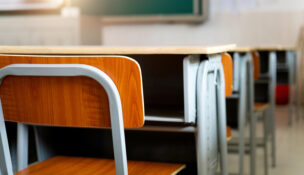
Why are bleachers so uncomfortable? I am aware that they are made so that kids can watch their classmates compete in sports like wrestling, basketball, volleyball, and the occasional school assembly. But I’ll be sitting for eight hours straight on those stiff plastic gym seats that are molded with all the ergonomic concerns of a cafeteria plate and bolted to frigid metal. In the last four months, I’ve sat on those harsh seats more often than I’ve sat on my own couch as the proud mother of a wrestler. As I gradually lose all feeling in my lower back, I’ve learned to pack water, snacks, and the emotional fortitude needed to cheer with enthusiasm. Nevertheless, I continue to attend because, evidently, being a parent involves equal parts unwavering love and dubious seating arrangements.
For the past five years, I’ve sat shoulder to shoulder with the same crew of wrestling parents, all of us shifting in synchronized discomfort like we’re part of a very committed stretching routine. We’ve become our own little cheer squad, rooting for every wrestler like he’s ours, gasping in unison, maybe even clapping a little too aggressively, and yelling technique suggestions that no one on the mat can actually hear. We’ve pulled up stats on our phones, analyzed opponents like assistant coaches, and confidently whispered strategies as if the head coach might glance up and invite us down. And when our sons lose, especially those matches they were “supposed” to win, we pass snacks, offer perspective, and remind each other (and ourselves) that character is built in the tough moments. Five years of hard plastic seats have molded more than my posture; they’ve shaped friendships, humility, and a whole lot of shared pride.
Wrestling is a rough sport, maybe because it demands that level of practice, sacrifice, and all-in commitment. It’s not just about showing up to a match; it’s about understanding the techniques, drilling them until they’re muscle memory, pushing through conditioning when your body would rather negotiate, and sometimes navigating strict diets and weight classes that require more discipline than most adults exercise around holiday desserts. Wrestling doesn’t care if it’s your birthday, prom weekend, a “we deserve a break” kind of Tuesday, or Valentine’s Day. The mat is unmoved by special days on the calendar. It only responds to preparation, focus, and grit.
Even though I finally invested in one of those padded bleacher seats, the kind that promises lumbar support and a “more enjoyable viewing experience,” my back still aches by the second period. I shift left, then right, cross my legs, uncross them, stand up for no reason other than to remember what circulation feels like, and sit back down like I’ve solved something. The cushion helps… in theory anyway. In reality, it’s just slightly more comfortable agony.
Take last weekend. I waited three hours for The Boy’s first match of the day. Three. Whole. Hours. I checked the bracket seventeen times, analyzed potential opponents like I was prepping for a televised breakdown. I had to make sure my battery was fully charged and my camera was clean to capture the match. The whistle blew… and 29 seconds later, it was over. Twenty-nine seconds. I had barely settled back into my padded throne of discomfort before we were cheering and clapping and looking at each other like, “Well! That happened quickly.”
Being in the stands has reminded me that parents have a role to play, too, and it’s not just cheering the loudest. With every win our children celebrate, another child walks off the mat feeling discouraged. For every fist pump on one side of the gym, there’s a quiet car ride forming on the other. That reality has a way of softening you.
We sit shoulder to shoulder with parents who are pacing the same hallways, refreshing Trackwrestling like it’s breaking news, and shifting just as uncomfortably in those hard plastic seats while waiting hours for their child’s next bout. Their nerves look just like ours. Their hope sounds just like ours. Wrestling has taught me that humility doesn’t stop at the edge of the mat; it belongs in the stands, too. We can celebrate fully and still remember that someone else is disappointed. And modeling that balance may be one of the most important lessons our kids see us practice.
This weekend felt different. It was probably the last time I’ll sit in those stands to cheer for The Boy. His high school wrestling season is over, and the next time I’ll get to yell from the bleachers will be when he walks across a stage in a cap and gown. At some point between the first whistle and the final handshake, I found myself looking around those bleachers, the parents shifting beside me, the familiar echo of gym noise, and realizing I won’t have this exact opportunity again. No more long waits. No more frantic bracket-checking. No more collective gasps when a match gets tight.
Five years ago, I might have focused on how uncomfortable those seats were. This time, I felt the weight of something else entirely. Gratitude. Because those bleachers didn’t just hold tired parents, they held our shared hope, our pride, our nerves, and whispered prayers. They held me while I watched The Boy grow into someone strong enough to step onto a mat alone.
And honestly? There still isn’t anywhere else I would have rather been. Not once.