Sign In
Upcoming Event
 Free Newsletter

Susan Higginbotham: The leader
Executive Director, Pennsylvania Coalition Against Domestic Violence
January 9, 2018//
Susan Higginbotham: The leader
Executive Director, Pennsylvania Coalition Against Domestic Violence
January 9, 2018//


 Listen to this article
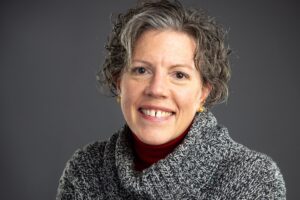
In October, the veteran nonprofit leader became executive director of the Pennsylvania Coalition Against Domestic Violence, based in Susquehanna Township.
Higginbotham was selected to lead the coalition following a nationwide search that began after longtime executive director Peg Dierkers departed early last year.
The coalition, known as PCADV, provides free and confidential services to nearly 90,000 victims of domestic violence each year, working with a network of 60 member programs around the state.
Higginbotham most recently served as executive director of the Philadelphia-based Society of Family Planning and the SFP Research Fund. Before that she was president and CEO of Planned Parenthood of Chester County and executive director of the AIDS Fund.
Before relocating to Pennsylvania, Higginbotham worked as executive director of a community-based domestic violence center in South Carolina, before going on to lead the South Carolina Coalition Against Domestic Violence and Sexual Assault as executive director.
It was while working in South Carolina that Higginbotham first observed the Pennsylvania coalition’s development as leader in the fight against domestic violence. She talked with the Business Journal soon after coming to the coalition about her vision for the organization, and about raising awareness of domestic violence issues in Pennsylvania and nationwide.
Higginbotham also spoke about a pending state legislative measure, Senate Bill 501, which would require defendants in protection-from-abuse cases to surrender their guns to a county sheriff or other law enforcement agency, or to a federally licensed firearms dealer, once a final order is issued. That would end the practice of weapons being turned over to family or friends, something critics see as a dangerous loophole.
The following conversation has been edited for length and clarity.
CPBJ: What drew you to this particular role?
Higginbotham: I’ve been familiar with PCADV for more than 20 years, because I was the executive director of the South Carolina coalition. Back when I was working there, we really thought of PCADV as the premiere state coalition. It is the first one that was organized, and it has a storied history.
I’ve been a nonprofit CEO for about 25 years now. The programmatic areas where I have expertise have to do with domestic violence, sexual assault and sexual reproductive health. I’m trained as a therapist, and I used to do a lot of direct service, but I’m not one of those people who wanted to be a full-time therapist. What I discovered along the way is that I had good administrative skills. I’m very entrepreneurial. I love the business side of running nonprofits. I’m often the person who pushes nonprofits to function more like businesses. What makes us different than a for-profit business is the type of mission we have, and also what we do with the profit that we make. We put it back into programming. So I’m a very mission-driven person.
I thought it was rather auspicious that, coincidentally, my first day on the job was also the day we had our domestic violence awareness ceremony at the capitol. The focus there was on the victims that we lost in Pennsylvania, as well as honoring survivors. And to me, that is the core of what we’re doing.
And I’m looking forward to working with the 60 member programs that are part of the coalition. They are the people on the ground, every day, covering 67 counties in the state, helping people access safety and services. A big part of the coalition’s role is working with, mentoring and supporting all those programs.
CPBJ: What are your organizational and legislative priorities?
Higginbotham: At this point my priority has to do with really solidifying our work here in Pennsylvania, getting to know all of the member programs, getting to know legislators, and also trying to fill the gaps in laws related to orders of protection, like with Senate Bill 501.
CPBJ: Tell me about that proposed law.
Higginbotham: For someone that has a final order of protection, or who’s been convicted, it would mean that they have to give up their weapons. Just to be clear, we’re not interested in seeing law-abiding citizens have their firearms taken away. We do think that there should be consequences to somebody who is a documented or convicted abuser. The balance is their right to own a gun versus somebody’s right to life and liberty. There’s got to be some balance there.
CPBJ: How hard of a legislative struggle do you think that’s going to be?
Higginbotham: It will probably be an uphill battle, because culturally Americans appreciate having the ability to own and purchase firearms, and we know that that’s a cultural thing. But this is a commonsense approach, I think, and that’s how we have to talk about it. And when we talk about domestic violence, we have to talk about how as a community we try to make things safer for families, and children. I think there are some gaps. We want to be vigilant about well-meaning legislation that may have ramifications that haven’t been thought about, and really work with our legislative and public policy committee, and our colleagues at other organizations, to move our legislative agenda forward. I know the member programs are really invested in the coalition’s work around that.
CPBJ: You mentioned how PCADV was seen as a trailblazer and a model. What did Pennsylvania do right?
Higginbotham: Forward-thinking, and really having a business plan to get the work done, to get the funding for the national resource center, which is now its own separate entity, doing amazing work. So I think that it was really the people who got things started in the beginning and worked in a cohesive way. I’d just like to build on that strength, on that history, to take us to the next chapter.
CPBJ: Over the course of your career, what changes have you seen in the way domestic violence is addressed by organizations, individuals, government?
Higginbotham: Twenty years ago we thought of violence and sexual assault as more standalone issues, for lack of a better way to put it. Over time, the culture has changed, and become more focused, in a broader way, on other issues that compound the impact of domestic violence. That’s why we’re looking at issues such as economic justice, transportation, housing — all of those things impact survivors, and their ability to leave an unsafe situation. We know that immigration status, civil rights issues — that affect communities of color, LGBT communities — are important too. Domestic violence doesn’t discriminate. It affects people of all socioeconomic backgrounds, all races, all communities, all types of relationships. That’s why it’s important for us to work with colleague organizations that are working on those specific issues.
Not that long ago, people used to think of intimate partner violence as a personal issue, when really we’re so interconnected that these things ultimately affect everybody in some way or another, so we’ve got to focus on prevention. It is a priority, as is helping young people see modeled, healthy relationships and behavior, especially as they’re starting to date.
CPBJ: From a business perspective, we know that domestic violence can spill over into the workplace. Can you speak to the ways in which workplaces can get involved, and help employees who are experiencing these issues?
Higginbotham: These things are costly — in many ways, including employee absenteeism, or employees who are having trouble focusing on work because of trauma at home. I think that employers can help through HR processes. Businesses routinely have people who come in to talk about why employees should contribute to their 401(k) plans. That’s a good thing. (They could) reach out to PCADV or someone in their HR department to have some kind of annual program about the domestic violence services that are available, and connect people with options for safety and support.
CPBJ: What’s your estimate of how many families are affected?
Higginbotham: Statistics show that every nine seconds, somebody is battered. When you think about it that way, it’s overwhelming. Every year, approximately 40,000 individuals seek protection from abuse orders in Pennsylvania. That’s significant. And that doesn’t speak to how many people are dealing with domestic violence but maybe not reaching out to get assistance.
CPBJ: There has long been a stigma attached to domestic violence, and historically that was one reason why people may not have come forward. Are more people coming forward today than in decades past?
Higginbotham: I think that is somewhat true. There is a little bit more public support for survivors who are willing to tell their stories. I was on a radio show this morning, and a survivor called in to talk about her story. It really takes a great deal of courage to do that, because sometimes people judge. It’s human nature to say, “That would never happen to me,” or, “If I were in that situation, here is what I would do.” And those things aren’t really helpful. The best thing that people can do is support that individual, to help them get help.