Sign In
Upcoming Event
 Free Newsletter


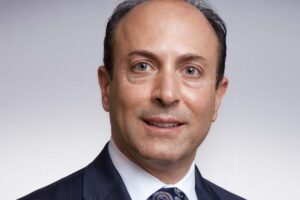
Dr. Robert Harbaugh, chief medical officer of Milton S. Hershey Medical Center and senior vice president for academic practice, will step down from his leadership roles effective Nov. 1. PHOTO/ PROVIDED
Penn State Health CMO to step down, interim named


- Dr. Robert Harbaugh will step down Nov. 1 as chief medical officer of Milton S. Hershey Medical Center.
- Dr. Umar Farooq appointed interim chief medical officer.
- Harbaugh led Penn State’s Department of Neurosurgery to national prominence.
- A renowned neurosurgeon and researcher, Harbaugh will continue as University Distinguished Professor.
Dr. Robert Harbaugh, chief medical officer of Milton S. Hershey Medical Center and senior vice president for academic practice, will step down from his leadership roles effective Nov. 1, according to a media release from Penn State Health and Penn State College of Medicine. Dr. Umar Farooq has been appointed interim chief medical officer. A board-certified nephrologist, Farooq currently serves as an associate chief medical officer at Penn State Health.
Harbaugh will continue to serve the institution as a University Distinguished Professor and Penn State Alumni Fellow, the highest honor bestowed by the Penn State Alumni Association.
“Dr. Harbaugh’s impact on medicine reaches far beyond Penn State. His groundbreaking research, national leadership and dedication to improving care have helped shape modern neurosurgery,” said Penn State Health CEO Dr. Michael Kupferman in the media release. “We thank him for his contributions to our organization, and we look forward to his continued work in educating the next generation of neurosurgeons.”
Harbaugh has dedicated his career to advancing neurosurgery, academic medicine, and health care leadership, according to the release. After earning his undergraduate degree from Lebanon Valley College and his medical degree from Penn State College of Medicine, the Red Lion native completed neurosurgical training at Dartmouth, where he became a full professor and led several key programs, including the Cerebrovascular Disease Center and the neurosurgery residency program.
He returned to Penn State in 2003 as the founding chair of the Department of Neurosurgery, becoming the first graduate of the College of Medicine to lead a department, according to a media release. Under his leadership, the department grew from five faculty members and a probationary residency program to 34 clinical and research faculty, six accredited fellowships and a nationally respected residency program with 21 residents. By 2021, the department ranked 17th nationally in NIH funding.
“Dr. Harbaugh’s influence as a researcher and educator has been nothing short of transformative,” said Dr. Karen Kim, dean of Penn State College of Medicine in a media release. “His commitment to academic excellence and scientific innovation has elevated our institution’s reputation and inspired countless learners and colleagues.”
Throughout his career, Harbaugh has authored more than 450 publications, edited seven books and served as a visiting professor at over 75 institutions. His research has been supported by the NIH, NATO, USDA and the Commonwealth of Pennsylvania, among others. He also helped launch five business ventures and served on multiple editorial boards.
Nationally, Harbaugh held leadership roles in organizations, including the Society of Neurological Surgeons, the American Association of Neurological Surgeons and the American Board of Neurological Surgery. In 2021, he received the Cushing Medal – the highest honor in North American neurosurgery.
Among his many groundbreaking contributions, Harbaugh was the principal investigator for the first multicenter, double-blind randomized controlled trial in neurosurgery and published pioneering research on CT angiography for cerebrovascular disease, according to the media release.
Harbaugh and his wife, Dr. Kimberly S. Harbaugh, professor of neurosurgery at Penn State, have practiced neurosurgery for more than 60 years combined. The couple has given to establish or support several scholarship and educational funds at the College of Medicine, including the Curvin and Ida Kinard Scholarship in honor of Robert’s maternal grandparents, the Alumni Fellow Student Scholarship, the Penn State College of Medicine Department Chairs Challenge Scholarship and the Dr. Robert E. Harbaugh Lectureship in Neurosurgery, which was established by colleagues and friends in his honor.
The media release describes Penn State Health as an integrated academic health system serving patients and communities across 15 counties in central Pennsylvania. It employs more than 20,900 people systemwide. The system includes Penn State Health Milton S. Hershey Medical Center, Penn State Health Children’s Hospital and Penn State Cancer Institute based in Hershey; Penn State Health Hampden Medical Center in Enola; Penn State Health Holy Spirit Medical Center in Camp Hill; Penn State Health Lancaster Medical Center in Lancaster; Penn State Health St. Joseph Medical Center in Reading The system also includes Pennsylvania Psychiatric Institute, a specialty provider of inpatient and outpatient behavioral health services, in Harrisburg, and 2,417 physicians and direct care providers at 186 outpatient practices.
In 2017, Penn State Health partnered with Highmark Health to facilitate creation of a community care network in the region. Penn State Health shares an integrated strategic plan and operations with Penn State College of Medicine, the University’s medical school.