Sign In
Upcoming Event
 Free Newsletter

Pa. businesses take firm line on economic recovery in GOP survey


The biggest challenges for Pennsylvania businesses include continued declines in customer volume, financial concerns and limitations from Gov. Tom Wolf’s mitigation orders, according to a recent survey of 921 businesses.
The survey was conducted by the Pennsylvania House Republican Caucus and presented in a report created by Martin Causer (R-McKean), chairman of the House Majority Policy Committee.
Respondents included businesses from all but two counties and a wide variety of industries such as food and dining, health and medicine, construction, manufacturing and more.
The four-question survey asked business owners what they want the state legislature to know about the challenges facing their industry, what type of assistance would be most beneficial, what change would make the greatest impact to their business and what other suggestions they had for the state’s economic recovery.
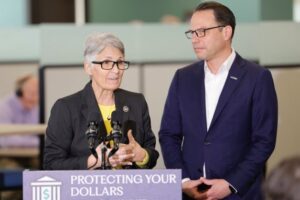
Causer and House Majority Leader Kerry Benninghoff (R-Centre County) presented the report, which will be given to the caucus for future policy making, during a press conference on Tuesday.
The 42-page report’s overriding message can be summed up as “get out of the way,” according to Causer.
“The bottom line is, if we want our state and regional economies to bounce back and be better than they were before, we need to get government out of the way and focus on policies that lower the cost of doing business and give employers and investors the tools they need to lead and succeed,” he said.
Asked about the current challenges facing Pennsylvania’s businesses, 31% of respondents said their biggest challenge was related to the governor’s shutdown orders, restrictions and capacity limits.
Respondents also reported financial concerns, customer declines, and hiring workers or getting previous workers back to work.
Businesses in the survey most commonly noted grants, loans and financial help as the type of assistance that would be the most helpful to receive from the state. The second most common answer was opening businesses up, followed by limiting regulations.
Of the respondents, 28% said the greatest impact on the future success of their business would come from a reduction in taxes, closely followed again by the request for the state to reopen businesses.
On the fourth question, “What other suggestions do you have to kick-start the Commonwealth’s economic recovery?” respondents suggested for the third time that the state fully reopen businesses to 100% capacity.
“Nearly a third (32%) of all respondents suggested the best way to kick-start the economy was for them to be open for business. These business owners want to be able to operate,” Causer wrote in the report. “Essentially, they want government to let responsible business owners run their businesses and employ their workers. The best kick-start to the economy is to let businesses do what they do best.”
As of April 1, Pennsylvania’s restaurants are permitted to allow bar service and both dine-in and bar service in indoor and outdoor areas at 75% capacity if they are self-certified with the state’s Open and Certified Pennsylvania program.
Gyms and fitness facilities, as well as In-person retail businesses such as museums, amusement, casinos and theaters more can operate at up to 75% capacity.
Pennsylvania’s business community has already surmounted many of the challenges placed in front of it through the pandemic and will be able to drive the state’s economic recovery forward with help from the legislature, said Alex Halper, director of government affairs for the PA Chamber.
“To successfully move the state forward, employers need lawmakers to serve as partners with the private sector, advancing a pro-growth, forward-thinking agenda that will help employers and their valued workforce, while also encouraging investment and attracting new and emerging industries to the Commonwealth,” Halper said.