Sign In
Upcoming Event
 Free Newsletter

New UPMC in Central Pa. leader: Compassion key to best health care
New UPMC in Central Pa. leader: Compassion key to best health care


The new president of UPMC in Central Pa. believes a health care system can have the latest equipment and technology, but it is the personal connection, compassion and kindness that separates the great from the good.
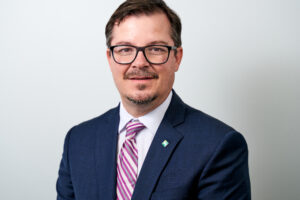
David Gibbons, who took the helm of the UPMC’s region that covers Adams, Cumberland, Dauphin, Franklin, Fulton, Juniata, Lancaster, Lebanon, Mifflin, Perry and York counties in June, started his career as an oncology nurse.
“You see people in a different light when they are facing cancer,” he said. “That is still part of my DNA today. People remember the treatment they received.”
Gibbons, who is also in charge of UPMC’s Northwest and North Central Pa. Regions, said people are the heart of the organization.
“It is with purposeful intention that we spend every day improving the employee and patient experience,” he said from his Harrisburg office. “We offer dignity and respect and enrich professional growth.”
And while UPMC looks to hire the best talent possible, Gibbons said, “It’s not just the smartest person, but the one who is a compassionate, caring provider who offers the highest level of care for the patient.”
He cited a housekeeper in one of his hospitals as an example.
This is a person everyone knows, and patients adore,” he said. “I was rounding there one day, and the staff identified her as someone to be recognized.”
Gibbons related an incident where a patient had lost his wife and child in a car accident and expressed to the staff that he no longer wanted to live.
“The staff observed her sitting by his bedside holding the man’s hand and offering support and praying with him,” he said. “She shared her own story of losing a child and that she had similar feelings at the time.”
Gibbons said through the compassion and caring the patient received from the housekeeper, he made it through the trauma.
A bit choked up, Gibbons said, “The story is touching because she obviously cared. This is the compassion I see here every day.”
As Gibbons moves into the region, he said central Pennsylvania is growing and while UPMC has a large footprint, the region is highly competitive. Along with the other health care systems, he cited competition from entities such as Walmart, Amazon and CVC.
Still, he said, “we offer access to patients at the level they expect.”
Gibbons cited Magee-Womens Hospital, which he called one of the largest women’s centers in the country that conducts a lot of research.
That research leads to advanced levels of care. Gibbons said through telemedicine, patients can access the physicians they need while staying in their local hospital.
“We use the opportunity to provide the highest level of care and services where the patient is,” he said. “The Magee team is our team, and we send our nurses for advanced training and education.”
However, like most other health care system leaders, UPMC is faced with a workforce shortage.
“I see this as an opportunity to redesign the delivery of health care,” he said. “How do we improve using more digital platforms and harnessing AI to offer convenience and access to our patients? That’s the secret sauce.”
In order to build the workforce, Gibbons said UPMC is collaborating with colleges and universities, vocational programs, high schools and even elementary schools to showcase careers in health care.
Just recently, UPMC joined a partnership with Harrisburg-based Emerge Education and Cumberland Valley School District on a program to educate high school students for allied health and health IT jobs.
“This offers potential growth at the entry level,” he said of the new program. “We can help charter a path through their career. If you haven’t experienced health care as a young person, you don’t know what’s available, so we hope this will spark their interest.”
And, in partnership with Harrisburg University of Science and Technology, UPMC opened UPMC Shadyside School of Nursing, a 16-month accelerated diploma program for registered nurses.
That expands the Shadyside School of Nursing at UPMC Harrisburg, which Gibbons said started this year with its largest class of 194 nurses.
“If they all graduate, just think of the number of people they will impact over the course of their life,” he said.
And with Pennsylvania recently joining part of the Nurse Licensure Compact, Gibbons said UPMC is hoping to attract nurses from neighboring states to fill vacancies.
“Our hospitals are Magnet hospitals,” he said which makes them centers for excellence. “As a nurse, if you are looking for a job, you want clinical excellence and that is UPMC.”
According to the American Nurses Credentialling Center, Magnet Recognition means education and development through every career stage which leads to greater autonomy at the bedside.
Gibbons agrees, saying nurses are looking for a work environment that offers them continuous opportunities for growth, which UPMC can offer.
Gibbons, who continues to stay current with all his nurse certifications, said continued education is critical for the growth and safety of everyone.
“During the pandemic, I worked clinically to help out wherever needed,” he said. “It’s common for me to wear scrubs and make hospital rounds.”
Gibbons, who has been with UPMC in 2009 as president of UPMC Northwest in Venango County, went on to become executive vice president and CEO of UPMC Hamot in 2012.
He was promoted to senior vice president of the Health Services Division and market president for Northwest Pa. And North Central Pa. Regions in 2021.
Prior to joining UPMC, Gibbons was the chief operating officer at Kennedy Health System in Voorhees, N.J. He also served as the director of managed care for the Visiting Nurses Association of Greater Philadelphia; the regional director of
operations, marketing and finance for Oncology Services Inc.; and director of oncology programs for U.S. Healthcare in Blue Bell, Pa.
Gibbons earned an associate degree in nursing and a bachelor’s degree in business administration from Clarion University of Pennsylvania and a master’s degree in health administration from Saint Joseph’s University in Philadelphia.
“Our goal at UPMC is to challenge ourselves to improve care from start to finish,” he said. “That is how a Center of Excellence continues to evolve.”