Sign In
Upcoming Event
 Free Newsletter

Recession or not, small businesses struggle with cost of borrowing

PHOTO/GETTY IMAGES
Recession or not, small businesses struggle with cost of borrowing


The current cost of borrowing money is creating a dilemma for businesses who need capital to grow their enterprises.
And even though the Federal Reserve held steady on interest rates during its Sept. 20 meeting, experts expect to see another increase before the end of the year.
The question small business owners face is when to borrow in climate of uncertainty, according to local experts.
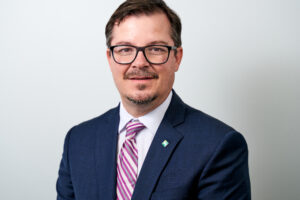
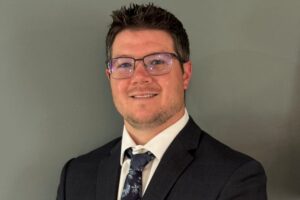
“A small business owner is running the everyday operation and not watching the Federal Reserve comments,” said Bryan Jasin, senior vice president, head of business banking, Northwest Bank.
When a small business owner needs to borrow at a variable rate, Jasin said they are feeling financial pressure because where rates were six percent a year ago, they are now 12%.
“That’s a big strain on cash flow,” he said.
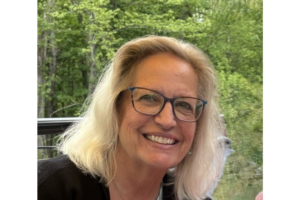
Lindsay Griesemer, financial advisor with Stonebridge Financial Group, said even though rates didn’t increase, the longer the high-rate environment continues, the more cheap loans will roll over into new expensive ones, impacting businesses’ bottom line.
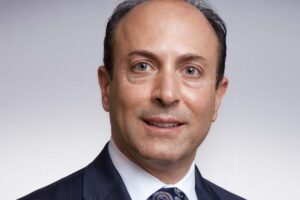
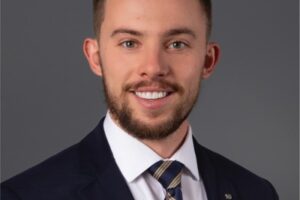
Don Nicholson, chief investment officer and division senior vice president for Northwest Bank agreed.
“The language (Federal Reserve Chairman Jerome Powell) used indicates we may not be done with rate increases,” he said.
In fact, Nicholson said he expects to see another rate increase by the end of the year.
“When businesses are worried about rates going up, some tend to move spending forward,” he said.
He cited long-term rate increases on a 10-year loan which are sitting at 4.5% where a month ago, they were 3.5% and a point lower.
“How long do you wait?” he asked.
Nicholson said early in the interest rate cycle, the initial reaction he saw from business owners was to wait.
“But the rates aren’t going down so the question is ‘what is the normal’,” he said.
When companies are faced with debt that is maturing, they still have to borrow resulting in rolling off lower costs to higher costs, Griesemer said, adding the cost of a loan becomes progressively more prohibitive as rates rise.
By example, she said, “a 10-year $100,000 loan with 2% interest paid monthly would result in a total of about $10,416 paid in interest over the life of the loan. If that rate were 6%, the total interest paid would be $33,225. Although the rate tripled, the total cost more than tripled. These costs could incentivize business to delay or decrease large expenditures.”
Jasin said the best performers are waiting for more clarity when considering borrowing. In fact, he said his division has seen loan discussions drop from six to eight a month to one to two.
“Business owners are feeling the pressure,” he said. “When you are looking at X, you can deal, but when you are dealing with moving points, you need to make an educated guess or wait and see.”
“The primary reason the Fed has been raising rates is to fight inflation, because in theory higher rates slow down an economy and pump the brakes on inflationary pressures,” Griesemer said. “Inflation has indeed come down during the last year, but it has been very sticky, and the Fed does not feel that they have brought it down sufficiently. Keeping rates high should continue to bring down inflation, and if it doesn’t the Fed may need to continue hiking and risk more economic pain.”
Jasin said the best operators will continue to win. However, with wages, costs of goods and loans all increasing, profits are pinched.
Nicholson said businesses can “outrun it” by growing, but with capital being more expensive, they need to drive their pricing to maintain the balance.
“Lower tier operators may not know how to navigate this,” Jasin said.
Some small businesses operate from their checkbook and may find there is not enough money to continue, Jasin said. That results in going out of business.
“Many businesses are still trying to feel out their price points,” Nicholson said. “They can’t keep raising prices monthly because consumers are tired of seeing it.”
Nicholson cited convenience stores. With gas at $4 a gallon, the consumer may not buy a sandwich or snack because of the cost to fill the tank. Those stores, he said, don’t make a lot on gas, so they are losing money.
Griesemer agreed. “High rates should curb customers’ spending as they have less discretionary income due to higher debt payments. Both consumers and business have been surprisingly resilient to rate hikes so far, but monetary policy typically acts with long lags, and we are starting to see some cracks form. Without the help of stimulus and low rates we cannot expect to see the expansion of the last few years continue.”
“We are seeing savings rates decrease and credit card debt increasing so spending is decreasing,” Nicholson said. “Wages are not keeping up with inflation.” Nicholson said whether there is a recession or not, there will be a slowdown and it will be led by a decrease in disposable consumer income.
“It appears that the average consumer is beginning to run low on the savings they built up during the stimulus era, and they could continue to be troubled by
mortgage rates at over 20-year highs and the return of large student loan payments,” Griesemer said. “The consumer makes up a large portion of GDP and is now facing significant headwinds.”
The definition of a recession is debatable, she said, and some could argue that the country entered a technical recession last year when there were two consecutive quarters of negative GDP growth.
“However, the economy has grown since then and we clearly have not experienced the slowdown that was anticipated,” Griesemer said. “The labor market and the consumer have held up remarkably well given rate hikes. It’s anybody’s guess whether we will actually enter this long-expected recession in the next few quarters, but some cracks are forming, and Fed Chair Powell stated that his base case is not a soft landing. We lean towards expecting a recession but would not be surprised either way.”
Nicholson agreed, saying there will be slowing in early 2024 even though the current quarter is good.
“We will see slower growth for an extended period of time,” he said.
Griesemer said assigning a date to recessions or expansions is impossible, but it seems unlikely that the economy can expand significantly with rates as high as they are.
“Powell does not know when a recession is coming, but he is expecting one. Both the Fed and the futures markets are also indicating high rates for years to come, and we would expect to see more pain before we see any dramatic growth,” she said. “The next few quarters and the 2024 election will be pivotal for where our economy ends up heading.”