Sign In
Upcoming Event
 Free Newsletter


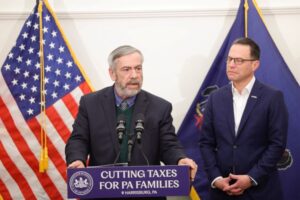
Secretary of the Commonwealth Al Schmidt said making it easier for out-of-state physicians to practice in Pennsylvania will improve access to healthcare. PHOTO/PACAST
Out-of-state physicians to gain more opportunities to practice in Pa.


To help ease the health care worker shortage, the Shapiro Administration is allowing out-of-state physicians increased opportunities to practice in Pennsylvania.
Secretary of the Commonwealth Al Schmidt announced Monday that physicians with licenses issued by 40 other states and territories participating in the Interstate Medical Licensure Compact (IMLC) who obtain a corresponding “letter of qualification” will be permitted to apply to the Pennsylvania state boards of Medicine and Osteopathic Medicine for expedited licensure to practice. Administered by the Interstate Medical Licensure Commission, the IMLC is an agreement to streamline and expedite the licensing process for physicians.
“Governor Shapiro and the Department of State are committed to reducing barriers to licensure for qualified professionals entering life-saving healthcare professions,” Schmidt said in a statement. “Making it easier for out-of-state physicians to practice in the commonwealth will meaningfully improve Pennsylvanians’ access to healthcare.”
Pennsylvania was authorized to join the IMLC in 2016 via Act 112, which increases patients’ access to in-person and telehealth care that is particularly valuable in rural and underserved areas.
“This is a big step cutting through red tape that has been withholding Pennsylvanians, especially those in rural areas, from improved medical services,” said Rep. Jesse Topper, the prime sponsor of Act 112. “Residents will have easier access to healthcare from highly trained physicians thanks to the Commonwealth joining the Interstate Medical Licensure Compact.”
A Hospital and Healthsystem Association of Pennsylvania (HAP) survey revealed the practice areas with the greatest need for more physicians include anesthesia, behavioral health/psychiatry, emergency medicine, family medicine/primary care, gastroenterology, hospitalists, obstetrics/gynecology, orthopedic surgeons, pediatrics, and urology.
“HAP thanks the Shapiro Administration for prioritizing the health care workforce infrastructure and its continued work to fully operationalize interstate licensure compacts,” said Nicole Stallings, president and CEO of HAP. “Today’s announcement will help clinicians get to work caring for patients faster. Pennsylvania is facing a persistent shortage of health care workers across all settings, and hospitals continue to report vacancies for patient care professionals statewide, with rural communities under the greatest strain.
“Implementing the Interstate Medical Licensure Compact will give Pennsylvania hospitals and health systems another tool to build their workforce and meet the growing need for care across the commonwealth,” added Stallings.
Schmidt stated that “by providing for expedited licensure through the IMLC, the commonwealth will quickly expand the pool of recruits for hospitals and other healthcare facilities. In turn, access to care will increase and burdens on overworked staff will be alleviated.
“Meanwhile, the Department of State continues to work diligently with its state and federal partners to satisfy the preconditions necessary to fully implement the IMLC and allow Pennsylvania licensed physicians to obtain expedited licensure in other compact member states and territories,” said Schmidt.
According to a release, preconditions include the ability to certify to other compact states that Pennsylvania applicants have undergone an FBI criminal background check, a process that requires FBI authorization.
“We are also working to ensure that other technical and regulatory requirements are in place so that the commonwealth can fully implement the IMLC as quickly as possible once final FBI approval is received,” added Schmidt.