Sign In
Upcoming Event
 Free Newsletter


X-ray: The OptimalHT pins are used to correct hammertoe. PHOTO/COURTESY OF FORMA MEDICAL
Medical device developers look to improve orthopedic care


A small startup company nestled in Camp Hill is on a mission to help Baby Boomers and anyone else suffering from foot pain.

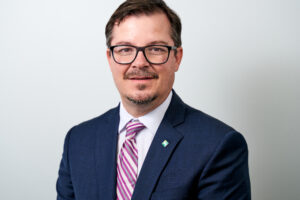
Andrew Davidson, CEO of Forma Medical, and his partner James Gault, vice president, received approval from the Federal Drug Administration (FDA) in July to launch their first product, OptimalHT, the world’s first instrumented Minimally Invasive Surgery (MIS) Hammertoe Arthrodesis procedure.
“We started about two years ago exploring ways to treat hammertoe deformities,” Davidson said. “We explored for about a year and found a solution.”
The two spent the next year fundraising and working with partners to raise the capital needed to bring their invention to market.
Davidson said hammertoe, or deformities in the four “lesser” toes, affect many older adults and the current treatment is invasive and painful.
“Foot deformities is a fact of aging,” he said. “The muscles and tendons degrade causing pain,” he said. “The way it has been being fixed is poor.”
To change that, Davidson and Gault, both of whom worked for several health care companies, including Globus Medical, where they met, went to work to improve the treatment.
“We are a tiny company with a small sales force, but we want to reach as many patients as we can,” Davidson said, adding the company is working with orthopedic surgeons and podiatrists across the country who are interested in advancing the treatment.
“We work with both because their approaches are different,” he added.
One of the first to work with Forma Medical is Dr. Norman Siddiqui of LifeBridge Health in Baltimore, Maryland.
“It’s no secret that minimally invasive surgery is the future of foot and ankle care,” Siddiqui said. “The novel OptimalHT approach for digital correction is ideal for less invasive surgery in the foot to reduce edema, expedite recovery, and achieve the results my patients demand.”

Davidson said while advances have been made to the way bunions, or deformities on the big toe, are corrected, hammertoe care has not made advances until now.
Traditionally, hammertoe is treated by making a large incision along the top of the toe and threading a wire through it. That wire stays hanging out of the toe during the healing process, which Davidson said takes about two months.
“The large incision creates ‘sausage toe’ because without this instrument, the opening of the toe causes swelling,” Gault said.
“The patient wears a boot and must keep the toe clean and dry. After two months, the patient goes back to the surgeon to have the wire removed,” Davidson said. “That is antiquated.”
The two engineers decided to see what they could create to help make the procedure less invasive.
With their OptimalHT, a small incision is made on top of the toe to prepare the joint for fusion, which Davidson said makes the body respond by healing it.
A guide wire is then run through the toe to allow for insertion of the OptimalHt pin. The guide wire is then removed, and the patient is back in shoes within two weeks, he explained.
Davidson, who has a mechanical engineering degree from Penn State and a master’s degree in mechanical engineering from the University of Delaware, said he has started a few companies over the years that failed. More recently, he founded a company to create a rib fracture device that he sold in 2019.
Through conversations with family and friends, the two realized that there was a clinical need to fix the way hammertoe is treated.
“I’m 41 but I have a lot of family and friends who have foot issues. It’s a highly common thing, especially for women who wear fashion footwear,” Davidson said. “It’s fun when you can help the people around you.”
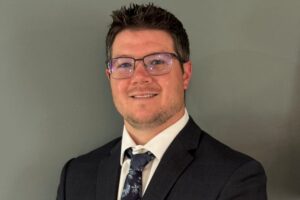
Gault, who holds a bachelor’s degree in bioengineering from Penn State and a master’s degree in engineering from the University of Pennsylvania, said the sales force is growing rapidly because of the clinical need to fix the treatment.
Davidson and Gault said they plan to grow the company organically. Currently, they partner with local companies for manufacturing and legal and regulatory tasks.
“We are experts in developing products, so we use local folks for those things we don’t do every day,” Davidson said.
Currently, the two are working on three new products, one of which they are awaiting FDA approval for.
“The number of products we develop will depend on our flow and how we decide to run the business,” he said. “If we stay independent, we will have lots of products.”
Davidson explained that the FDA approval granted for the OptimalHt allows them to use it for other anatomical procedures, specifically in the hands.
“The implants are thinner and longer than anything out there so surgeons are interested in exploring this,” Gault said.
However, with the approval being so new, Davidson said they are looking for surgeons to help market the product.
“We pinch ourselves every day to be able to do what we love and help people,” Davidson said.