Sign In
Upcoming Event
 Free Newsletter


Workforce shortages and increased staffing ratios are creating a crisis in long-term health care. PHOTO/GETTY IMAGES
Care for aging population in jeopardy without increased funding


- Seniors will outnumber children by 2030 in the U.S.
- Long-term care providers report 25% of licensed beds are offline.
- The gap between what it costs for long-term care facilities to operate and what they are paid added up to $1.2 billion.
- Medicaid pays $253 per resident per day, a shortfall of $80 to $90 per patient.
For the first time in history, older adults will outnumber children nationally by 2030.
Just 10 years later, experts say there will be 1.2 million seniors over the age of 80.
Since 2020, 25 nursing homes in Pennsylvania closed their doors. Nationally, more than 400 have closed. Those that continue to operate report 25% of licensed beds are offline due to staffing shortages and low reimbursement rates for care.
On April 22, The Centers for Medicare and Medicaid Services (CMS) finalized the “Ensuring Access to Medicaid Services” rule, incorporating an “80-20” provision. This mandates that providers of home- and community-based services must allocate 80% of their Medicaid reimbursements directly to caregiver wages.
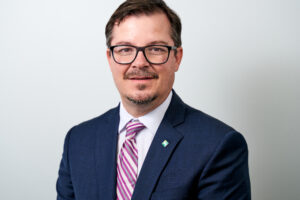
This all adds up to a crisis in caring for the aging population, said Zach Shamberg, president and CEO of the Pennsylvania Health Care Association.
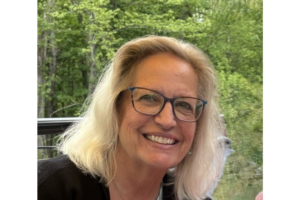
Garry Pezzano, president of LeadingAge PA, agreed, saying the lack of workers and underfunding from Medicaid adds up to limited access to care in a state that ranks in the top ten in the nation for seniors.
“Everyone is being impacted,” Pezzano said, adding the lack of beds has increased hospital stays by about two days.
“An urgent response is needed to increase funding and build the workforce,” he said.
In response to the passage of the “Ensuring Access to Medicaid Services” rule, Pezzano said, “The Biden Administration’s federal staffing rule is a staggering disappointment to nursing home providers everywhere. This is especially true in Pennsylvania where we’re already seeing the impacts of underfunded, ill-timed state mandates firsthand.”
Pezzano said the implications are “stark” for providers, staff, and older adults alike.
“Mission-driven providers will continue to be forced to decrease capacity, sell, or close entirely” he said. “Existing staff will face further burn-out and excessive overtime for the sake of additional workers who do not exist. And seniors will find themselves with less and less options for high-quality care in the communities of their choosing.”
This is especially critical with state staffing ratio requirements increasing. Shamberg said the ratio of caregivers to patients increased in July 2023 and is set to increase again this July. The federal government is also working on new staffing mandates, he said.
Pezzano said a LeadingAge PA survey showed that 48% of its member providers declined hospital referrals due to a lack of staff.
Both said Medicaid needs to increase so long-term care providers can increase wages to attract workers to fill the void. The LeadingAge PA survey showed 93% of providers said they would increase wages with a Medicaid increase.
Currently, Pezzano said, on average, Medicaid pays $253 per resident per day, a shortfall of $800 to $90 per patient.
“The reimbursement from Medicaid is not keeping pace with the increasing costs, so providers can’t invest in the workforce,” Shamberg said, adding the same is true for home and community-based care providers.
Shamberg said that while wages for certified nursing assistants (CNA) has increased from $12 or $13 an hour to $17 to $20 per hour, the wages are not “sustainable.”
“We need the legislature to invest in nursing homes to increase wages,” he said.
Pezzano agreed saying while the Bureau of Labor shows there has been a slight recovery in the nurse workforce for hospitals and doctor’s offices where wages improved the most, there has been an additional six percent decline in staffing at long-term care facilities since COVID-19 ended.
‘You can’t invest and walk away’
Sen. Bob Casey, D-PA, chairman of the U.S. Senate Special Committee on Aging, held a hearing recently on the long-term care workforce to examine the challenges facing workers who are underpaid and overworked.
Casey is proposing the Long-Term Care Workforce Support Act that would increase the number of direct care workers, provide pathways to enter and be supported in the workforce, and improve compensation and working conditions to improve access and quality of long-term care for families.
While the hearing focused on direct care workers who care for clients in their homes or community settings, the hearing also addressed the need for the long-term care facility workforce.
The issues addressed were the same as Pennsylvania is facing, highlighting that it is also a national problem.
Pezzano said that while its good federal legislators are looking at the issue, Pennsylvania knows best what Pennsylvania’s older adults need.
The Centers for Medicare and Medicaid Services oversee long-term care facilities. Shamberg said passing staff mandates at the federal level would make state regulations “a mess.”
And, he added, there are no federal dollars to go along with proposed mandates.
“Patients need to be put over paperwork,” Shamberg said. “We are proud to work with unions, providers and legislators to do what’s best for the state. We did the work two years ago and did it the right way.”
“Lawmakers invested a 17.5% increase two years ago. We are asking now that they continue to invest in long-term care,” Shamberg said. “As we emerged from the pandemic, they invested to meet staffing requirements, but now more needs to be done. Our message is ‘you can’t invest and walk away.’”
Pezzano said 70% to 80% of long-term care residents rely on Medicaid. In a 2022 study, Pezzano said the gap between what it costs for long-term care facilities to operate and what they are paid added up to $1.2 billion.
This year, both organizations are asking for $300 million from the state which they say would allow providers to improve staffing ratios as 70% of the funding would go to the bedside – resident care and staff.
“They funded the year one ratios. Now year two needs funded,” Pezzano said, “We got partial funding and now with a reassessment, the gap is $900 million.”
The organizations are also asking for $9 million for Life Programs that provide transportation, meals and medication for seniors living in their homes who go to centers during the day and for skilled labor in the home. That’s a five percent increase, Pezzano said.
Addressing the workforce
In addition to increasing Medicaid, Shamberg said work needs to be done to increase the workforce.
“We need to recreate how things are done,” he said. “The House and Senate are working on a long-term worker package of bills.”
Those bills address modernizing CNA training to create a more efficient process to take the competency exam, attract younger people by allowing high school juniors and seniors to earn credit for working in facilities, and creating a new position – a certified medication aid (CMA) to expand the career ladder.
Shamberg said the CMA would be allowed to administer certain medications that now only licensed practical nurses (LPN) and registered nurses (RN) can do. The position would allow CNAs to grow in their jobs, he said.
Sen. Bill 668, which would create the position, has passed the Senate and is now up for a vote in the House.
Pezzano said there is also a movement to allow third- and fourth-year nursing students to sit for the CNA exam, allowing them to work while finishing their nursing education.
Like nursing programs, there is a lack of necessary CNA teachers. Shamberg said if legislation was passed, RNs could train CNAs.
“We need to adopt an exponential mindset and look at what could be,” Pezzano said. “We need to get ahead of this.”
Pezzano sees this in three steps: urgency, working to fix the crisis; incremental improvements; and the exponential mindset.
That could include the use of technology and telehealth, he said.
“We are trying to attract people who grew up with technology but are asking them to take jobs without it,” Pezzano said.
Telehealth would allow residents to stay in the home while speaking with specialists and for follow-up visits after surgery with the skilled staff on hand.
It would also allow for physician consultations with the nursing staff, he said.
“We need to stop demonizing long-term care,” Shamberg said. “We need to work together to prop them up and value the work they do every day.”
Pezzano agreed saying long-term care facilities were made out to be “villains.”
“In truth, they are compassionate, and mission driven to help people,” he said. “We need to show the good work that goes on. These nurses work with people long term and build relationships.”
He suggested recruiting high school students to work in dietary to expose them to the work and offering mentoring where freshmen are paired with senior citizens to learn resilience from them.
“Our members are not-for-profit. Some are for profit, but all are mission driven,” he said. “When they can connect to people who have a mission to care for older people, there is a sense of belonging, being part of a team. The providers talk about increasing retention by making them feel like they belong. But we need the funding to do better.”