Sign In
Upcoming Event
 Free Newsletter


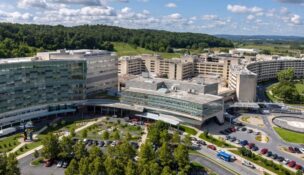
UPMC Harrisburg’s Kidney Transplant Program recently achieved ELITE status from INTERLINK COE Networks & Programs as part of its Programs of Excellence transplant network. PHOTO/PROVIDED BY UPMC
UPMC Harrisburg earns stroke care certifications


 Listen to this article
UPMC Harrisburg has earned two certifications for a stroke care procedure that it says reduces risk of disability or death.
After an onsite review, UPMC Harrisburg earned The Joint Commission‘s Gold Seal of Approval and the American Stroke Association‘s Heart-Check mark for Thrombectomy-Capable Stroke Center Certification.
“This is a sign to our community that we’re ready to provide top-quality stroke care anywhere in the region, when every minute truly matters,” said Brandon Wattai, Stroke Program director for UPMC in Central PA. “The Joint Commission recognized that our care teams, emergency medical services partners, and support staff are highly coordinated in our efforts to help patients get rapidly treated for and recover from strokes.”
Thrombectomy is the surgical removal of blood clots from the brain and if performed promptly, can help reduce the risk of severe disability or death by restoring blood flow as quickly as possible, UPMC in Central Pa. said.
While the procedure is performed solely at UPMC Harrisburg, patients across UPMC in Central Pa.’s network have access to this care through coordination between UPMC in Central Pa. hospitals and emergency medical services teams. UPMC in Central Pa. said this follows rapid detection using advanced AI-enhanced neuroimaging available at all sites, and real-time virtual collaboration on patient cases with Pittsburgh-based vascular neurologists.
“Congratulations to our exceptional physicians, care teams, administrative staff, and emergency medical services teams on achieving this designation,” said Elizabeth Ritter, president, UPMC Harrisburg. “This recognition by The Joint Commission is a testament to your teamwork and compassionate care and is just another example of how UPMC delivers life changing medicine in central Pennsylvania.”
UPMC in Central Pa.’s Stroke Program underwent a rigorous onsite review in February. Joint Commission standards are developed in consultation with health care experts and providers, measurement experts and patients. The reviewers also conducted onsite observations and interviews and noted that care teams demonstrated excellent communication, coordination with emergency medical services, and a passion about their roles in caring for patients and striving for the highest levels of quality.