Sign In
Upcoming Event
 Free Newsletter

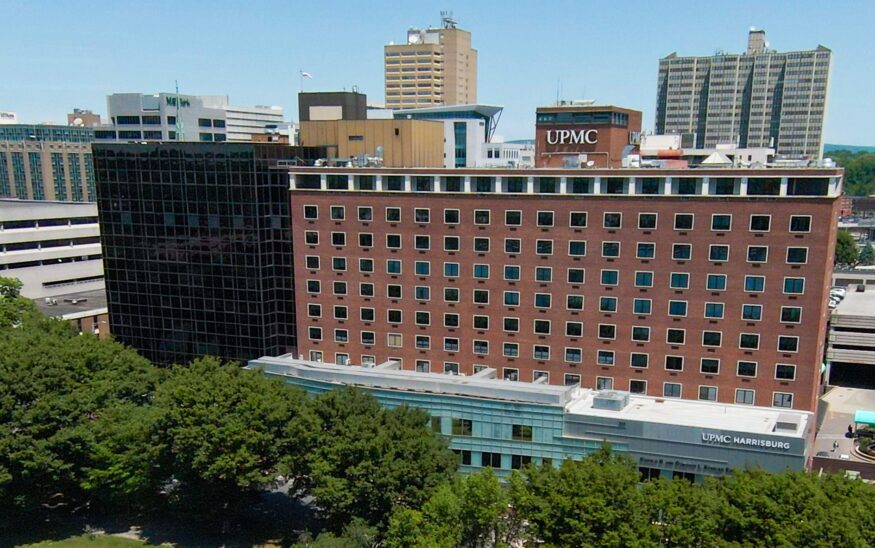
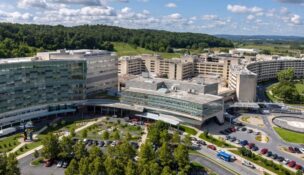
UPMC Harrisburg has achieved the highest level of stroke care certification. PHOTO/PROVIDED BY UPMC
UPMC Harrisburg earns comprehensive stroke center certification


 Listen to this article
UPMC Harrisburg has achieved the highest level of stroke care certification.
For its ability to receive and treat Central Pennsylvania’s most complex stroke cases, the Joint Commission and American Stroke Association named UPMC Harrisburg a Comprehensive Stroke Center, their highest level of stroke care certification.
According to a release, the designation reflects UPMC Harrisburg’s clinical capabilities and quality measures for advanced stroke care, including care offered 24 hours a day, seven days a week, with onsite access to a variety of neurosurgical and vascular procedures, including mechanical thrombectomy and aneurysm clipping.
“Time is of the essence when responding to a stroke,” Dr. Bart Thaci, director of neuroendovascular care, UPMC Neurological Institute, UPMC Harrisburg said in a statement. “Comprehensive Stroke Center designation is evidence that our patients have timely and quality access to a variety of lifesaving of neurosurgical and neuroendovascular procedures.”
UPMC Carlisle, UPMC Community Osteopathic, UPMC Hanover, UPMC Lititz, UPMC Memorial, and UPMC West Shore are all designated as primary stroke centers and work with Stat MedEvac, UPMC Community Life Team, and other local emergency medical services (EMS) agencies to diagnose and treat strokes, and if necessary, quickly transfer them to UPMC Harrisburg for life-saving endovascular or neurosurgical procedures.
UPMC Harrisburg earned Thrombectomy-Capable Stroke Center certification in 2024. UPMC doctors have performed more than 375 thrombectomy procedures. UPMC continues to develop a stroke program in Central Pennsylvania, utilizing artificial intelligence programs and tele-neurosurgical consults to identify patients who could benefit from procedures available at UPMC Harrisburg, UPMC’s hub for advanced stroke care in Central Pennsylvania.
“Stroke care is a team effort and our recognition as a Comprehensive Stroke Center shows that our UPMC employees are committed to limiting the devastating impacts of strokes for our patients,” said Elizabeth Ritter, president, UPMC Harrisburg, UPMC Community Osteopathic, and UPMC West Shore. “Years of hard work and careful collaboration between our neurology, neurosurgery, emergency medicine and critical care teams; UPMC Community Life Team and local EMS providers; and Stat MedEvac partners, makes this achievement possible so we can show up for our community when the worst happens.”
Through stroke clinics in Harrisburg, Mechanicsburg and Lancaster, UPMC patients have access to the care and education they need to recover from and prevent future strokes. Nurse navigators work individually with stroke survivors to ensure they are getting follow-up care, treatments, and referrals to other medical specialists who can help them adjust to life after a stroke and prevent future strokes from happening.
“I’m proud of our care teams and their commitment to our patients and the community,” said Kimberly Rinehart, executive administrator, UPMC Neurological Institute. “UPMC staff and community partners across our region work every day to respond to, treat, and help patients recover from strokes, and we thank them for their efforts.”