Sign In
Upcoming Event
 Free Newsletter

Shapiro Admin leads multi-state coalition opposing federal joint employment rule
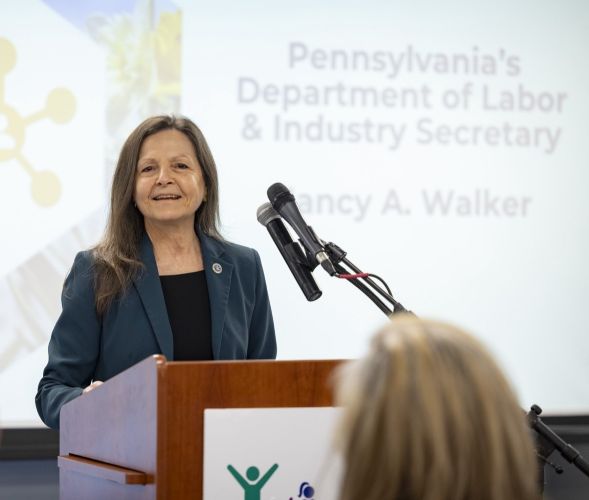
L&I Secretary Nancy Walker said the proposed federal rule would make it easier for companies to avoid responsibility when wage theft or other violations occur. PHOTO/PACAST
Shapiro Admin leads multi-state coalition opposing federal joint employment rule


 Listen to this article
The Shapiro Administration is heading a multi-state coalition opposing a federal rule that critics state would weaken worker protections and make wage theft harder to address.
The Pennsylvania Department of Labor & Industry (L&I) is leading a coalition of 22 states, including 20 attorneys general and six additional state labor departments, in opposing a proposed joint employment rule by the U.S. Department of Labor that make it more difficult to hold employers accountable for wage theft and additional labor law violations.
“Governor Shapiro has made clear that Pennsylvania will stand up for workers and push back when federal actions threaten their paychecks and their rights to be treated fairly on the job,” L&I Secretary Nancy Walker said in a statement. “This proposal would make it easier for companies to avoid responsibility when wage theft or other violations occur. Workers should not be left with less money in their pockets because an employer hides behind a contractor, staffing agency, or other intermediary.
“The Shapiro Administration is proud to be leading this coalition and will continue fighting to make sure workers are paid what they are owed and that employers who follow the law are not undercut by those who do not,” added Walker.
Additional states and agencies joining Pennsylvania in the coalition include the attorneys general of Arizona, California, Colorado, Connecticut, Delaware, Illinois, Maryland, Massachusetts, Michigan, Minnesota, New Jersey, New York, North Carolina, Oregon, Rhode Island, Vermont, Virginia, Washington, Wisconsin, and the District of Columbia, as well as the state labor departments of Illinois, Maine, Minnesota, Oregon, Virginia, and Washington.
The proposed rule narrows the standard for determining joint employment under the Fair Labor Standards Act, Family and Medical Leave Act, and Migrant and Seasonal Agricultural Worker Protection Act, according to a release. Joint employment means a worker may have more than one employer legally responsible for complying with worker protection laws. Per the release, this can happen in different workplaces, such as two restaurants with common management who share employees, or a general contractor who uses sub-contractors and both control the work of employees.
The multi-state coalition is urging the U.S. Department of Labor to withdraw the proposal, warning that it would make it harder for workers to recover unpaid wages, create confusion for employers and enforcement agencies due to conflicts with federal case law, and revive a modified version of a 2020 standard struck down by federal court.
In addition, the coalition argues that the proposed rule does not reflect the reality of modern workplaces, including industries where workers may be directed, monitored, scheduled, or evaluated by more than one business. The proposed rule would have a harmful impact on workers in low-wage and high-violation industries, including farmworkers and people working in construction, where labor brokers, staffing agencies, and subcontractors are often used to meet workforce demands.
L&I’s Bureau of Labor Law Compliance enforces Pennsylvania labor laws, including the Pennsylvania Minimum Wage Act, Wage Payment and Collection Law, Prevailing Wage Act, Construction Workplace Misclassification Act, and Child Labor Act. Workers who believe they have experienced wage theft or other labor law violations can submit a complaint on L&I’s website.