Sign In
Upcoming Event
 Free Newsletter


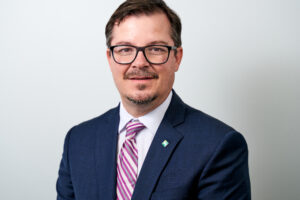
Participating in the Central Penn Business Journal Virtual Panel Discussion are from clockwise from top left: Moderator Ioannis Pashakis, Jim Stuccio, senior vice president, East Region, WellSpan Health; James DeBord, president, Schreiber Center for Pediatric Development; and Nicole Stallings, president and CEO, Hospital and Healthsystem Association of Pennsylvania.
Health care systems still struggling to regain financial footing


Four years after the COVID-19 pandemic, hospitals and health care systems are still facing financial turmoil.
Nicole Stallings, president and CEO, Hospital and Healthsystem Association of Pennsylvania, said, “COVID has a long tail.”
Speaking as part of a Central Penn Business Journal Virtual Panel Discussion, Stallings said while health systems were facing workforce shortages and low reimbursement rates before the pandemic, “COVID amplified” the issue.
Today, 39% of the state’s hospitals are operating in the red and 13% had an operating margin under 4%. Since 2020, more than a dozen hospitals have closed, she said.
“COVID had an $8.1 billion impact on the health care industry,” Stallings said.
Jim Stuccio, senior vice president, East Region, WellSpan Health, said the industry has seen a “tremendous” challenge maintaining operating margins.
“We are in a transformative time. At the same time, we are treating sicker and sicker patients with the aging population,” he said.
A daily issue Stuccio sees is the fractured supply chain, especially for drugs.
“The inflationary costs for everything we use has increased operating costs three to five percent, depending on where you are,” he said.
Stuccio pointed out that 75% of hospital reimbursements come from fixed sources and don’t keep pace with inflation or the increased costs of labor and supplies. He noted, too, that 75% of costs are variable every year.
“This macroeconomic conflict is unsustainable over time,” he said.
For Schreiber Center for Pediatric Development in Lancaster, the fixed reimbursement from Medicaid means the outpatient treatment center operates in the red every day, said President James DeBord.
“More than 90% of our patients are covered by Medicaid because they are special needs,” he said. “The reimbursement doesn’t cover the cost of services. Most organizations choose not to provide outpatient pediatric services because of this.”
DeBord said of the $6 million Schreiber annual budget, $3.5 million comes from Medicaid reimbursement. The other $2.5 million comes from philanthropy.
“The pandemic only exacerbated this. We bled money endlessly,” he said.
While only shutdown briefly, DeBord said the center used telehealth to continue to see patients. Those therapies were not covered for telehealth prior to COVID and took time for providers to start coverage. They have since been dropped from coverage.
Stallings, who heads the advocacy group for hospitals and health care systems across the state, said the workforce is the first big challenge as there has been a significant increase in pay and bonuses to attract and maintain staff. Flexible scheduling adds to the costs.
“It is starting to bear fruit,” she said, “but there are still double-digit vacancies.”
Add to that the increased costs of supplies and drugs, hospitals are struggling to maintain operations, she said.
Stuccio said while it’s a challenging time for WellSpan, “imagine the difficulties smaller systems are facing.”
WellSpan is focusing on a value-based model, Stuccio said.
“This is our true north. We can be cost sensitive and sustainable for our communities,” he said. “By the virtue of the work we’re doing, we are driving top quality scores.”
Stuccio pointed to Artisight, a system that “marries people processes and technology to improve workflows,” and Zipline, a drone delivery system that moves supplies from one facility to another.
Both free up workers to do more patient-centered tasks, he said.
“We did a study of the time and flow of floor nurses,” Stuccio said. “During an eight-hour shift, two or more hours was spent in front of a computer documenting care.”
WellSpan started a pilot program using AI to capture conversations and translate them to notes. Stuccio said nurses then review them before they become part of the patient’s record. The result is more time for the nurses at the bedside.
“Aren’t we all better off? This gives more satisfaction to nurses and its better for the patients,” he said.
Behavioral health is also an issue for health systems because there are not enough providers for the current need.
In fact, DeBord said with the completion of the center’s expansion and renovation, there is a dedicated space for eight behavioral therapists to treat a growing number of children seeking help.
However, because the center can’t find therapists, they are operating with just one.
“Finding therapists is virtually impossible,” he said. “We are trying to partner with health care systems, but the response has been ‘we can’t find them either’.”
Stallings said behavioral health care is a major issue because when care can’t be provided, patients end up in emergency departments, which are facing other issues too.
“Emergency departments can’t discharge patients to nursing homes because many don’t have beds to take them,” she said. “We are an advocate for hospitals and now, nursing homes too.”
“There is no silver bullet,” Stuccio said. “A year ago, we took a hard look at the number of behavioral health patients presenting. We challenged ourselves to find the right care for them.”
Stuccio, pointing out an acute care setting isn’t always the best place to treat behavioral health issues, said he’s proud of some of the plans WellSpan has made.
One program, he said, is placing crisis counselors with police departments. WellSpan is currently working with 11 departments.
“They teach officers skills to deescalate situations. It has been wildly successful,” Stuccio said.
Another program involves special recovery teams who work with people to overcome social determinants of health, the things that may be triggering or escalating issues, he said. It’s important to bring care before they need the ED.
“We’ve been able to improve the average length of stay in the emergency department from 30 hours to 12 hours,” Stuccio said.
Stallings said policy changes take time and she is happy to see many in the industry solving their own problems.
She cited a partnership between Cumberland Valley School District, UPMC and Emerge, an online education organization, that is training high school students for health care jobs.
“No one is resting. Everyone is looking at all avenues to care for patients,” Stallings said.
“We didn’t get here overnight, and we aren’t going to solve it overnight,” Stuccio said. “We all need to work together. I’m hopeful, but the challenges are daunting.”